Plan for your pets when your family is growing

Plan for your pets when your family is growing
When a family is expecting a new baby, life changes in many ways – not only for the parents but also for the pets who share the home. A dog or cat that has been the centre of attention may suddenly have to share space, time, and affection with a newborn. Without preparation, this shift can cause confusion or stress for your pet. Here are some ways to help your furry friend adjust smoothly to the arrival of your little one.
Understand your pet’s point of view
Pets thrive on routine and familiarity. When new sounds, smells, and people enter the home, it can be unsettling. Try to see the situation from your pet’s perspective.
A dog used to regular walks might become anxious if the schedule changes. A cat may feel displaced when baby furniture appears in its favourite corner. By recognising how your pet experiences these changes, you can take steps to make the transition easier.
Start preparing early
Begin making small adjustments during pregnancy or before adopting a child. Gradual changes help your pet adapt without feeling overwhelmed.
- Adjust routines slowly – If feeding or walking times will change, shift them little by little.
- Introduce baby items – Let your pet sniff the stroller, crib, or baby lotion so these new scents become familiar.
- Teach calm behaviour – Train your dog to stay in its spot when you hold the baby, or teach your cat to avoid the crib.
- Create safe spaces – Give your pet a quiet area to retreat to when the house gets busy.
The more prepared your pet is, the calmer it will be when the baby arrives.
When the baby comes home
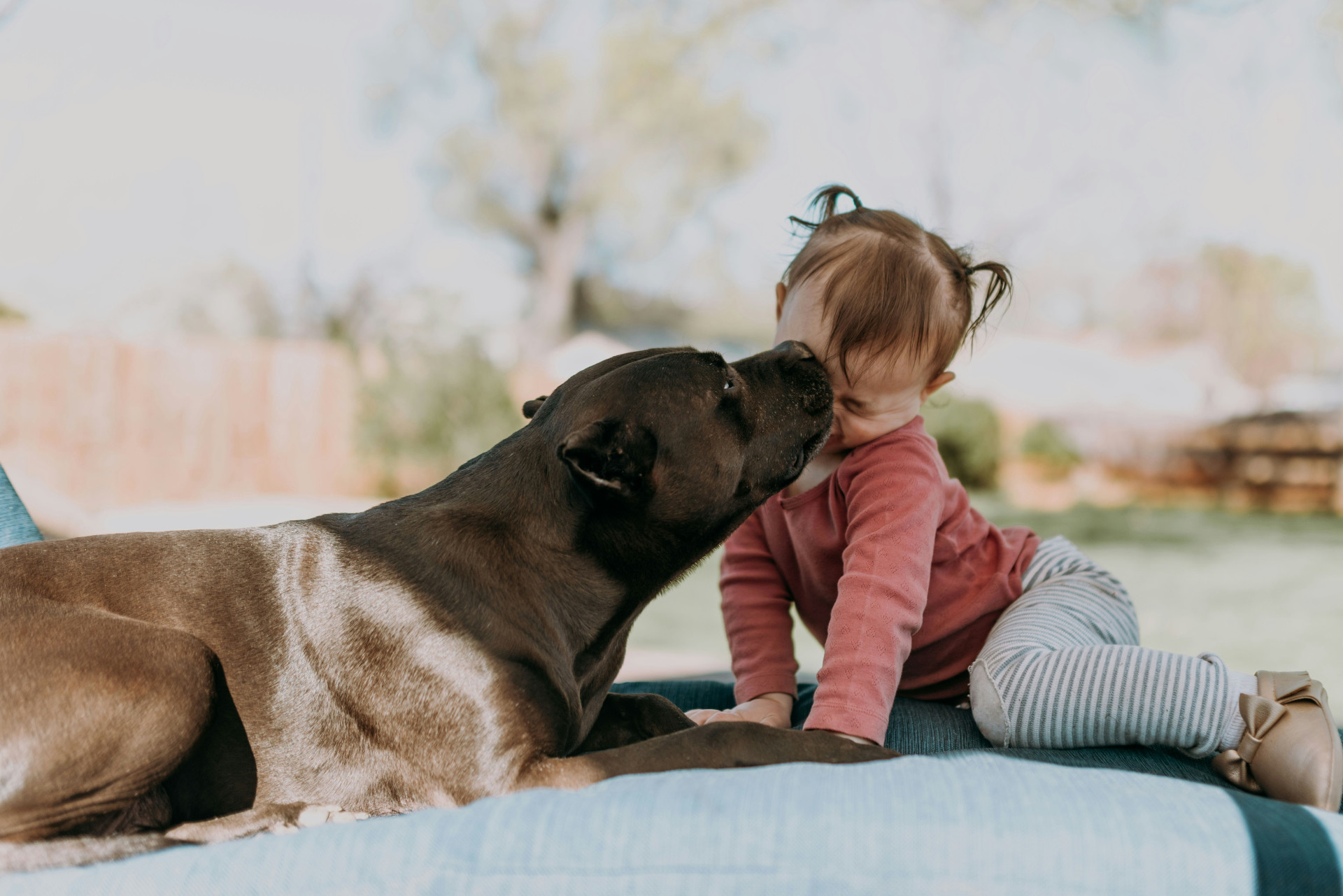
The first days after birth can be hectic, but they are also crucial for setting the tone between your pet and the baby. Allow your pet to meet the baby in a calm environment. Keep some distance at first and let your pet approach at its own pace. Reward gentle, relaxed behaviour with praise or treats.
Avoid scolding your pet for being curious or uncertain. Instead, use short, positive interactions and gradually increase the time they spend together as both get used to each other.
Keep your pet’s place in the family
Even though your focus will naturally shift to the baby, your pet still needs attention and affection. Many animals react negatively if they suddenly feel ignored.
Try to maintain small routines your pet enjoys – a short walk, a few minutes of play, or a cuddle while the baby naps. It’s not about equal time, but about maintaining connection and reassurance.
If you have supportive family or neighbours, ask them to help with walks or playtime. This keeps your pet’s routine stable and gives you some relief.
Safety and respect
Most pets adapt well to babies, but supervision is always essential. Even the gentlest animal can react unpredictably if startled or cornered.
- Never leave your baby and pet alone together.
- Make sure your pet can move away if it feels uncomfortable.
- As your child grows, teach them to treat animals gently and respectfully.
By setting clear boundaries and ensuring safety, you create a peaceful environment for both your child and your pet.
As your child grows
As your baby becomes a toddler, your pet can become a wonderful companion and teacher. Pets help children learn empathy, responsibility, and kindness. Encourage your child to take part in simple tasks – filling the water bowl, brushing the pet, or joining you on walks. These shared moments strengthen the bond between them.
A happy home for all
Welcoming a new baby is a big change, but with planning, patience, and understanding, your pet can adjust beautifully. When both your child and your pet feel secure and loved, your home becomes a place where everyone – on two legs or four – can thrive together.